
Category:
News
News
BREEAM V7: a new era for refurb and fit-out.
10/11/2026
What do the latest BREEAM V7 changes mean for existing buildings?
Following the launch of BREEAM UK New Construction V7 in 2025, the next major evolution of the sustainability assessment framework has arrived, with the release of BREEAM Refurbishment (RF) and Fit Out (FT) V7.
Released on 15 July 2026, registrations opened on 24 September 2026. The new standards represent a significant update of the previous BREEAM Refurbishment and Fit Out 2014 scheme. They also bring together the previous UK and International approaches into a common framework, improving consistency and comparability across global markets whilst recognising local regulations and requirements.
Building on the changes introduced by BREEAM UK New Construction V7, the new standards reflect the growing importance of decarbonisation, whole-life carbon, operational performance and climate resilience across the existing building stock.
One of the most significant changes is the introduction of two separate assessment routes: BREEAM Refurbishment V7, covering wider building upgrades, and BREEAM Fit Out V7, tailored to interior-focused projects. This provides a more proportionate approach, with requirements better aligned to the scope of works being undertaken.
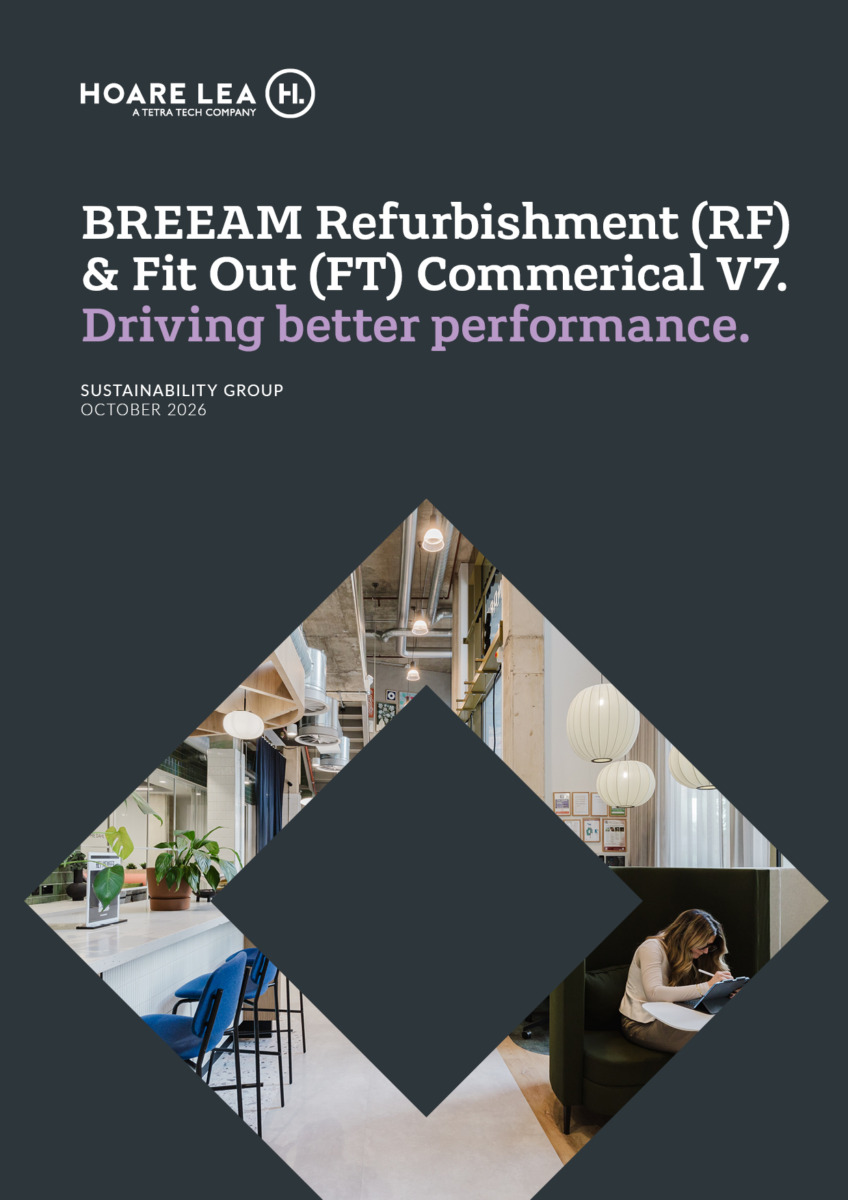
Read our analysis of BREEAM Refurbishment and Fit Out Commercial V7
Alongside this restructuring, V7 introduces broader and more stringent minimum standards, with greater emphasis on measurable sustainability outcomes, including predicted operational energy performance and embodied carbon. For clients, developers and occupiers, this means sustainability considerations will need to be embedded earlier in project planning and decision-making.
Key changes by theme
Energy and carbon
Greater emphasis on predicted operational energy and carbon performance, energy-efficient systems and equipment, and flexible energy demand. New minimum standards also restrict fossil fuel use by in-scope building services and equipment at Outstanding.
Materials and circularity
Expanded life-cycle assessment and embodied-carbon reporting requirements, alongside greater emphasis on material efficiency, responsible sourcing, reuse and design for disassembly and adaptability.
Health and wellbeing
Strengthened requirements for natural and electric lighting, indoor air quality and occupant comfort, including new criteria addressing the non-visual effects of light and supporting healthy circadian rhythms.
Water and ecology
Updated water-efficiency requirements focus on improving the performance of water-using fittings, equipment and systems, with new operational water prediction credits under RF V7. Refurbishment projects also benefit from strengthened ecology requirements, including measurable biodiversity improvements and long-term ecological management.
Resilience
A new standalone category under BREEAM Refurbishment V7, introducing greater emphasis on climate and natural-hazard risk assessments, resilience strategies and adaptation measures to improve long-term asset performance. This category is outside the scope of BREEAM Fit Out V7.
Management and performance
Greater emphasis on commissioning, handover and aftercare, with closer alignment to soft landings principles and new opportunities to recognise zero carbon transition planning. The wider V7 framework also supports greater alignment with sustainability reporting requirements, including the EU Taxonomy.
What does this mean for your project?
The introduction of BREEAM RF and FT V7 brings new opportunities to demonstrate sustainability leadership, both in the UK and internationally, but also increases the importance of early engagement.
More stringent minimum standards, particularly for projects targeting Excellent and Outstanding, mean that energy performance, embodied carbon, commissioning and material selection will require greater consideration from the outset.
With registrations under BREEAM UK RFO 2014 closing on 27 January 2027, the introduction of V7 marks an important step forward for the refurbishment and fit-out sector. The updated standards provide an opportunity for projects to demonstrate greater ambition in sustainability, with a stronger focus on decarbonisation, operational performance and long-term asset value. Early engagement will be key to embedding these enhanced requirements into project strategies and maximising the benefits of the new framework.
For a more detailed breakdown of the changes, including the implications for individual credits and assessment requirements, explore our BREEAM Refurbishment and Fit Out V7 – Key Changes and Impacts guidance document.
How can Hoare Lea help?
At Hoare Lea, we have been delivering BREEAM assessments since 1990, supporting clients in achieving ambitious sustainability outcomes across new construction, refurbishment and fit-out projects.
Our experienced BREEAM Assessors and Accredited Professionals work collaboratively with our multidisciplinary specialists in building services, whole-life carbon, lighting, acoustics, air quality and environmental design to embed sustainability into every stage of a project.
Whether navigating the transition to V7, reviewing an existing assessment strategy or pursuing ambitious BREEAM ratings, we can help identify opportunities to maximise sustainability performance and deliver meaningful, measurable outcomes.
To find out more about how we can support your project, contact AshleyBateson@hoarelea.com or LaurenDecent@hoarelea.com