
Insights
A new norm: adopting the whole-landscape lens
UKGBC's new framework means nature-positive design is no longer an afterthought
Nature doesn’t stop at the site boundary, and simple planting schedules are no longer enough: as environmental performance is rapidly re-priced, it’s time to adopt a whole-landscape lens and measure outcomes, not intentions.
The UK Green Building Council’s Framework for a Nature-Positive Built Environment reframes how buildings and infrastructure are planned, designed, built and operated. Rather than treating nature as an afterthought or a tick-box exercise, it asks design teams and clients to make biodiversity net gains central to decision-making, and implement them at site, neighbourhood and landscape levels.
The construction industry will need to adapt to a new norm as the framework will impact project risk profiles, planning expectations, operating costs and, ultimately, asset value.

Planning, policy, the rest will follow…
Such frameworks often spur on regulatory and planning uplifts for local and national policy. Planning authorities and policy makers are increasingly aligning with nature-positive goals and it is expected that biodiversity and ecosystem services will feature more prominently in planning assessments, conditions and local policy language.
As the industry assimilates this new framework, highlighting operational benefits of a nature-led approach, the market will catch up. Investors, tenants and insurers are already paying attention to nature-related dependencies and risks such as flooding, biodiversity net loss and urban heat.
Well-designed natural features reduce operational burdens such as improved stormwater management, lower cooling loads from urban greening and enhanced occupant wellbeing that can support productivity and retention. Demonstrable gains for nature will increasingly influence capital allocation, leasing appeal and insurance terms.
Practicalities of a seismic shift
The industry is experiencing a shift from avoidance/mitigation of nature-based issues to net gain and enhancement. Developments must consider not just impacts but opportunities to create measurable ecological uplift across habitats and species. This will require baseline ecological surveys, target setting and measurable outcomes embedded in briefs and contracts.
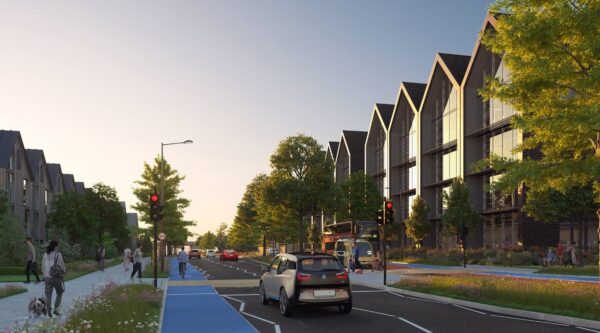
Projects will adopt a whole-landscape lens. Assessments must position site nature uplift within wider corridors, catchments and green infrastructure networks so ecosystem benefits are maximised. In practice, features should be implemented to connect with and complement surrounding natural systems rather than being treated as isolated pockets.
Measuring outcomes, rather than intentions, is achieved through the emphasis of robust metrics and monitoring. Measurable indicators (for example, habitat condition, native species abundance and functional connectivity) and post-completion monitoring plans will be expected.
How to deliver nature-positive outcomes
Developments must undertake early, integrated ecological benchmark analysis. Embedding ecological baseline and opportunity mapping at stages 0–2 can facilitate nature shaping massing, access, drainage and energy strategies rather than being retrofitted. Early action reduces cost and maximises ecological benefit.
Developments must have quantifiable targets and clear delivery pathways. This can be achieved via translating high-level nature-positive ambitions into brief targets (for example: percentage of semi-native planting, percentage increase in biodiversity units, or target canopy cover within a specified number of years). Also via producing delivery pathways showing who, when and how outcomes will be achieved and measured.
For a nature-led development to be successful, clear communication and cross-disciplinary design is crucial as this can be leveraged to lock-in co-discipline benefits. Coordination between ecologists, MEP, drainage and façade engineers can help ensure green roofs, water features and planting provide cooling, rainwater attenuation and biodiversity value without compromising energy performance or maintenance.
Nature-positivity doesn’t stop at handover; whole-life monitoring and adaptive management is required for it to thrive in the built environment. Development should specify monitoring protocols and realistic maintenance regimes, and use binding delivery mechanisms (for example, long-term management plans, ecological contractors, performance bonds) to provide confidence in outcomes.
Key decision time
When starting a project, set clear commercial targets. Decide whether to pursue ‘net gain’, ‘no net loss’ or a higher aspiration such as ‘nature-positive’, and make it a procurement criterion. Clarity upfront reduces scope creep and cost uncertainty. Ensure that targets you set align with local and national requirements as a minimum.
Invest in demonstrable baseline data. Commission ecological and hydrological surveys early to identify high-value habitats to avoid and realistic opportunities for enhancement. Early data reduces delivery risk and may shorten planning.
Projects should have early involvement of cost consultants to help budget for delivery and maintenance. Nature-positive outcomes require both capital and operational spend. Allocate funds for planting establishment, specialist contractors and multi-year monitoring. That expenditure should be treated as insurance against future compliance or retrofit costs.
The most successful projects are the ones with clear responsibilities and contractual levers. Embed measurable biodiversity outcomes and monitoring obligations in contractor and service provider contracts or consider long-term management agreements with local conservation partners.
Next steps
– Commission a pre-application ecological baseline and opportunity study.
– Define measurable biodiversity targets in the brief and procurement documents.
– Undertake multidisciplinary coordination workshops at concept stage.
– Allocate a dedicated budget line for habitat establishment and three to five years of monitoring/maintenance.
– Build flexibility into design for future adaptive interventions (for example, scaffold-friendly façades to allow living-wall retrofit).
Aligning value and nature
A nature-positive approach is increasingly central to good development, rather than an optional extra. It offers a route to de-risk planning, strengthen investor and occupier appeal and secure long-term operational resilience. Delivered well, nature-positive projects can reduce lifecycle costs, enhance asset value and demonstrate leadership in a market that is rapidly re-pricing environmental performance.
LET’S TALK:
DanielPetts@hoarelea.com